Category Archives: Articles

Composing for the Church: A Workshop Reflection

On Monday, May 19, 2025, the Tacoma Chapter of the American Guild of Organists hosted a thoughtful and practical presentation on composing for choirs, ensembles, and congregations, with a focus on music created in and for the church.

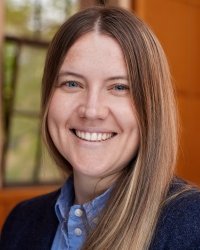
A woman stands in front of an organ in a church
Cheryl Drewes, Director of Music Ministries at Spanaway Lutheran Church

The program, at Spanaway Lutheran Church, was introduced by Cheryl Drewes, organist and Director of Music Ministries, and featured two local composers and church musicians: Dr. Dawn Sonntag and Sheila Bristow.
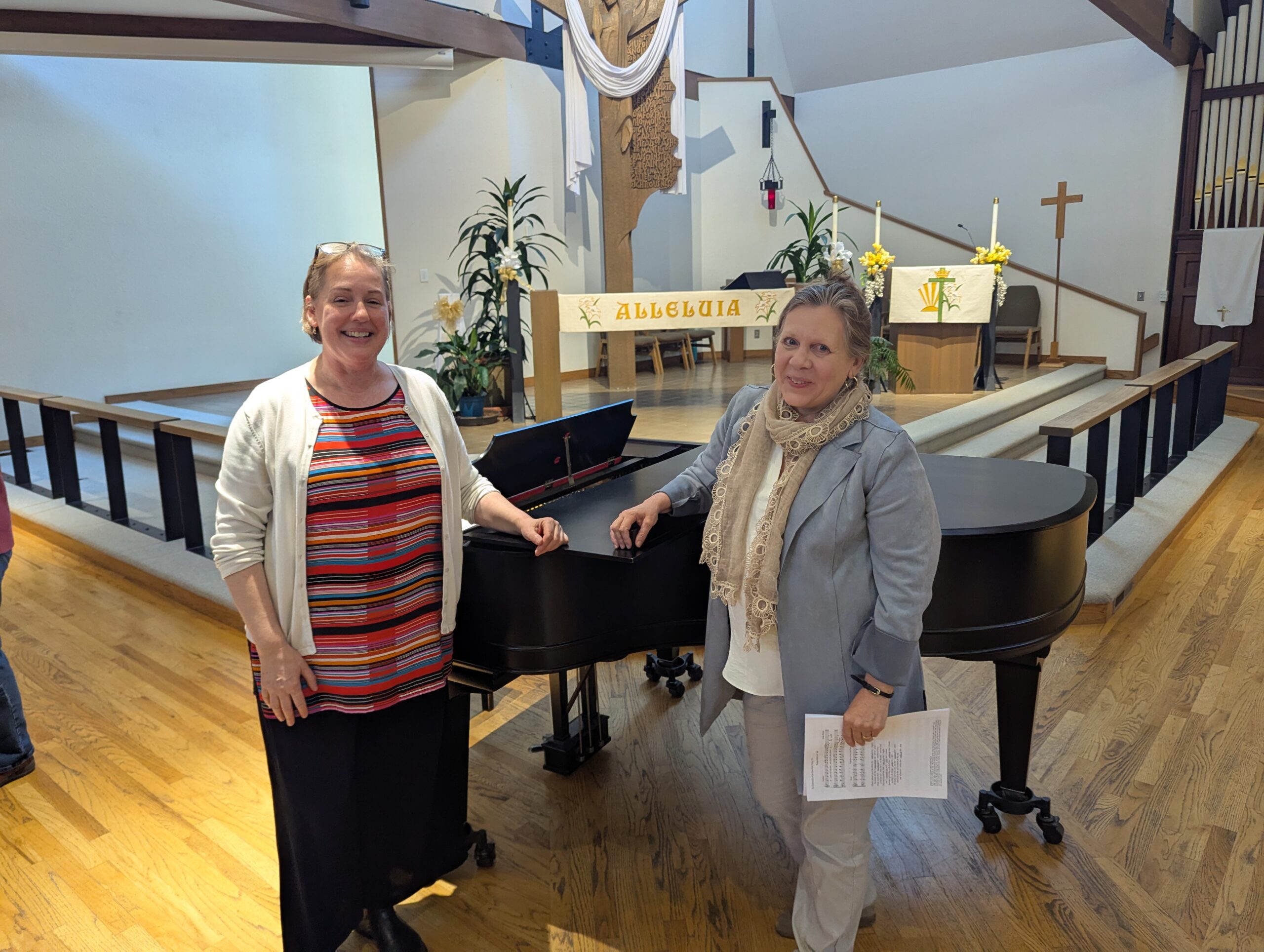
Two women stand in front of a grand piano in a church
Presenters Sheila Bristow and Dawn Sonntag

A Composer’s Musings: Dawn Sonntag

The two presenters split the hour, with Dr. Sonntag speaking first. Currently teaching part-time at Pacific Lutheran University, Dr. Sonntag spoke extemporaneously about her personal journey as a composer. From an early age, she felt called to write music, but was hesitant to pursue composition while the academic world favored atonality. Only later, when tonal composition gained acceptance again, did she begin to pursue it more seriously.

Dr. Sonntag provided the following written take-away points:

  • When composing a choral piece, sing all of your parts and imagine a different conductor looking at your score – what information would they need? 
  • A piece that works for your own ensemble will likely work for others, so consider sharing your music by publishing.  GIA and other choral music publishers do appreciate accessible pieces. You can also consider self-publishing (which I do) and can list your works on distributor websites like J.W. Pepper. You can also share your music through Choral Net by posting under “announcements.” Choral Net used to have a commissioning forum for connecting choral conductors and composers, but I cannot find this anymore. It would be helpful to start on online AGO group for sharing and commissioning works among AGO composer members. 
  • Help your pastor/choir/congregation understand that composing is time-consuming.  But it is rewarding to write pieces that you can immediately hear performed, and you can then share this work beyond your own church choir. 

She also provided the following list of her compositions and two sample pieces. The two pieces are copyrighted by Dr. Sonntag, but she has given permission for reproduction on the Tacoma AGO website and for personal use. Redistribution and performance are prohibited. Many of her works are available for purchase on her website.

Composing for the Church: Sheila Bristow

A woman in a thoughtful pose stands beside a piano in a church
Sheila Bristow addresses her audience as she explains her composition process

The second half of the program, led by Sheila Bristow, was rich in insight and practical guidance for those composing in church contexts. Bristow, the organist at St. Barnabas Episcopal Church on Bainbridge Island, earned her undergraduate degree in composition at Cornish College of the Arts. Despite not originally intending to pursue music as a profession—nor composition specifically—she now does both actively.

Bristow began by contrasting the romanticized image of the 19th-century composer—isolated and working for months on a grand concert piece—with the realities of composing in a church setting. Church composition often responds to immediate, practical needs: a specific liturgical moment, an unusual choir configuration, or an instrumental gap. Far from being a limitation, she noted, this environment offers unique rewards. Church composers get to hear their works performed right away, receive immediate feedback, and revise or refine their music accordingly. Even modest works can become part of the lived experience of a congregation.

She also touched on the financial realities of composing. Bristow shared that while she doesn’t sell her church music directly, income can come from commissions, sheet music sales, royalties, and licensing through organizations like OneLicense. This structure allows composers to write with purpose and still generate income over time.

Bristow illustrated her talk with three examples of her own compositions:

  • “Deep Peace” was composed for a Unitarian Universalist church in Seattle over thirty years ago. The congregation requested music that sounded classical but did not include overtly sacred language. Drawing on a text from their hymnal, Bristow wrote an SATB benediction response that remains a useful example of adapting sacred music traditions to fit non-traditional liturgical settings.
  • “O Queen of Heaven” was created when Bristow served at the Episcopal Church of the Redeemer in Kenmore, WA. Facing an August visit from the bishop—during the slowest choir month—she set a medieval Marian text to music. The piece was well-received and eventually published by GIA. While publication offers broader distribution and relationships with editors, she noted that the royalties are modest—typically just 10% of the cover price, with checks only issued after a $50 minimum.
  • Psalm settings for Blessed Sacrament Church in Seattle represent Bristow’s ongoing freelance work, even after her formal position there ended. Working with a professional choir and a congregation comfortable with chant, she composes Anglican chant psalm settings with antiphons for the congregation. These commissions, paid on a quarterly basis, provide both creative fulfillment and long-term use, with potential additional income from licensing reprints and streaming.

Sheila Bristow has provided a handout of musical examples (reproduced below), and has granted permission for reproduction on the Tacoma AGO website and for personal use. Redistribution and performance are prohibited.

Throughout her presentation, Bristow emphasized that composing in the church is not about perfection but about service, responsiveness, and presence. Whether writing for a feast day with limited singers or crafting music for weekly liturgies, church composers build relationships with their communities and create music that speaks to the spiritual lives of real people.

A table in the narthex of a church with cookies, pastries, and bottles of wine

Following the program, attendees enjoyed a warm reception featuring wine, cookies, and pastries—generously curated by Jan Regier, who visited several local bakeries to select the treats.
March Program: Bach and Expression

Tacoma AGO Hosts an Immersive Exploration of Bach’s Organ Music

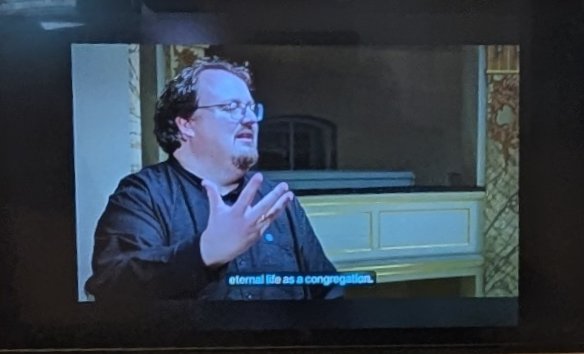
On March 21, 2025, the Tacoma Chapter of the American Guild of Organists hosted an extraordinary six-hour watch party featuring the documentary Bach and Expression. This event, planned and moderated by Chapter Dean Wyatt Smith, and held at The University Club of Puget Sound, was a departure from our usual one-hour programs, offering attendees an immersive experience into the depths of Johann Sebastian Bach’s organ music.

The centerpiece of the gathering was the screening of Bach and Expression, a comprehensive seven-part documentary exploring the nuances of performing and interpreting Bach’s organ works. Renowned organists Daniel Moult and Martin Schmeding guided viewers through historical performance practices, expressive techniques, and the unique characteristics of tracker-action organs. The film also showcased performances on meticulously chosen central German organs, emphasizing their historical authenticity and rich tonal qualities.

Throughout the afternoon, attendees engaged in vibrant discussions, reflecting on various aspects of the film and performances:

  • Acoustics of Historic Churches: Participants marveled at the extraordinary acoustics of the churches featured in the recordings, noting how the ambient qualities enhanced the resonance and depth of Bach’s music.
  • Expertise of the Presenters: The profound knowledge and exceptional playing skills of Moult and Schmeding were widely appreciated, with attendees expressing admiration for their insightful interpretations and technical mastery.
  • Authenticity of Tracker Organs: The use of historical tracker-action organs sparked conversations about their mechanical action, which provides a direct connection between the organist’s touch and the pipes’ response.
  • Balancing Historical Accuracy with Emotion: A recurring theme was the challenge of honoring historical performance practices while also allowing for personal expression. Attendees debated the extent to which an organist should adhere to historical conventions versus infusing individual artistic interpretation.
  • Registration Techniques and Repertoire: Specific pieces, such as the Toccata in F Major, served as focal points for discussions on registration choices. Participants analyzed how different stop combinations can alter the character and impact of a performance, sharing insights and preferences.

To complement the intellectual and auditory feast, refreshments were available throughout the event, fostering a convivial atmosphere that encouraged networking and further discussion among organ enthusiasts.

This extended program provided a rare opportunity to delve deeply into the art of interpreting Bach’s organ music, leaving attendees inspired and enriched. The Tacoma Chapter looks forward to organizing more such immersive events in the future, continuing our commitment to education, appreciation, and the celebration of organ artistry.

For those interested in viewing the documentary, Bach and Expression is available through Fugue State Films.

The Black Organ Composers Project

In recognition of Black History Month, the University of Washington School of Music has recently released “The Black Composers Project, Music for Organ” under the direction of Dr. Stephen Price, head of UW Organ Studies. With the assistance of six UW students from the flute, voice, violin, and organ studios he has produced a one-hour video which includes outstanding individual performances by students and one by Dr. Price along with introductions by Dr. Anne Searcy, Associate Professor of Music History at UW.

Dr. Stephen Price

It was a privilege to feature music from the African diaspora

–Stephen Price

Price, a member of both the Tacoma and Seattle AGO chapters, started planning for this comprehensive project in the summer of 2024. To highlight the evolution of organ music, he includes composers in the video ranging from the Classical era to the 21st century: Joseph Bologne Chevalier de Saint-Georges (1745-1799); Scott Joplin (1868-1917); Samuel Coleridge-Taylor (1875-1912); Florence Price (1887-1953); Charles Loyd, Jr. (b. 1948); Euridice Osterman (b. 1950); and David Hurd (b 1950.) As the final piece, Price improvises his own rousing accompaniment to the beloved spiritual “Ev’ry Time I Feel the Spirit.”

Sheet music

The video is enriched by Dr. Anne Searcy’s enlightening commentary about the historical background on each composer. She includes not only biographical details but interesting footnotes. As one example, did you know that the great Black contralto Marian Anderson performed settings of spirituals by Florence Price in her historic concert on the steps of the Lincoln Memorial in 1939? Dr. Searcy, along with the other performers, also discusses many aspects of the music itself.

Dr. Anne Searcy

The organs played in the video were chosen from the instruments in Seattle which the School of Music utilizes for lessons, practice sessions, and recitals. They include organs from St. Mark’s Cathedral (Flentrop), Plymouth UCC (Fisk), Church of the Blessed Sacrament (Bigelow), St. Alphonsus Catholic Church (Fritts/Richards, Op. 4), and University of Washington (Fritts, Op. 9).

Regarding his experience as artistic director of this project, Price has stated that “it was a privilege to feature music from the African diaspora, showcasing the richness and diversity within the culture.” With this video he and the UW School of Music have offered us a valuable tool for both appreciating and delighting in that same richness and diversity.

February Meeting: Playing From a Tablet

On February 17, 2025, Tacoma AGO members gathered in a classroom at the University of Puget Sound to hear a presentation on how to use a tablet as a music reader.

A man in a classroom standing beside a screen showing a presentation
Thomas Clark presenting “Playing From a Tablet” at the February 17, 2025 meeting

Chapter Secretary Thomas Clark used his presentation to show what hardware and software are available. Then, using musical examples, he showed how to create PDF files from music, and how to evaluate files available on IMSLP.org. Finally, using MobileSheets as an example reader, the group learned about the features available in score reading applications, and how to leverage them to enhance musicality when playing.

A classroom with people sitting at desks
The audience listens to a presentation on “Playing From a Tablet”

A PDF file of the presentation is included below. Much of the information in the talk was conveyed orally, and is not included in the PDF file. The file will be most useful to those who were present.

New Website for David Dahl (the organist)

It appears to me that the world is more interested in baseball players than organists because if you search Google for “David Dahl” you’re going to get the baseball player of the same name. That seems unfair because our David Dahl has had claim on that name for longer, and should get first billing, but he doesn’t. However, if you put in the web address https://daviddahl.us you will find a familiar face greeting you and ready to share a lot of information–and without a baseball hat.

With the help of several Tacoma AGO members and friends, David has spent several months recalling stories, finding pictures, and assembling lists and copies of publications and recordings. None of the lists is complete yet, and we will continue to add to them as David finds more resources. Nevertheless it is ready to be unveiled.

Many of the recordings and publications are copyrighted and cannot be provided on the website, but most of them have links to publishers where they can be purchased. However, David holds the copyright on quite a few recitals and anthems and he has chosen to make his audio recordings available for anybody to stream. David is also granting a license to churches and non-profit choirs to duplicate and perform any of the choral and organ music that is not commercially copyrighted.

If you have time for only one recital right now, I suggest that you start with the dedication of the Gottfried and Mary Fuchs Organ at PLU. You will be amazed!